
Lexbuzz Edition #27 — Something Wicked This Way Comes
-
Greetings, word lovers!
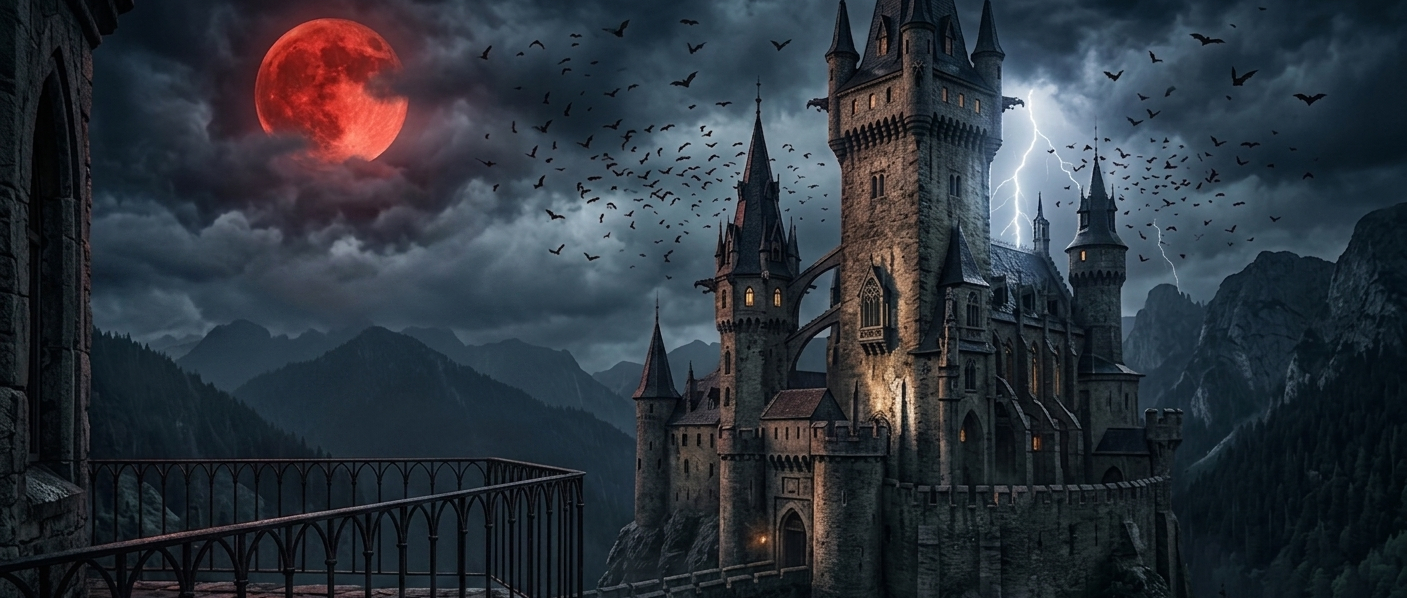
This edition, we step into the shadows — through cobwebs, candlelight, and a tale that refuses to die. On May 26th, we mark the 129th anniversary of a gothic masterpiece that introduced the world to vampires, Victorian horror, and the creatures of the night that continue to haunt our imaginations today.
Have you read it? Whether it chilled you or felt delightfully dramatic, we’d love to hear your thoughts in the comments.
— The Lexulous Team
✨ E E R I E
Part of speech: Adjective
Pronunciation: /ˈɪəri/ (EE-ree)
Definition: strange, haunting, or unsettling in a way that feels almost supernatural. It describes a feeling or atmosphere that quietly fills you with unease, mystery, or fear.
From the Old English earg, meaning fearful or timid, which passed through Middle English eri before settling into its modern spelling by the 16th century. Its cousins include the German arbe (cowardly) and the Proto-Germanic root argaz, tracing an unbroken lineage of fear-words back centuries.
In a sentence:
- "The abandoned manor stood at the edge of the village, its empty windows carrying an eerie stillness."
- "The forest path at midnight felt eerie — every sound amplified, every shadow seeming alive."
🧛 Bram Stoker's Dracula — 129 Years of Vampire Fiction
On May 26, 1897, a book was published in London that would change the face of horror forever. Dracula by Bram Stoker (1847–1912) introduced Count Dracula — a Transylvanian nobleman who drinks blood, casts no reflection, and possesses strange supernatural powers — and became the single most influential work in the history of vampire fiction.
The author who never knew his own fame
Stoker was Irish, a graduate of Trinity College Dublin, and worked most of his career as business manager for the celebrated Victorian actor Sir Henry Irving — a role that consumed most of his time and left him little room for his own writing. He wrote seven novels before Dracula and none of them brought him lasting recognition. Dracula itself was initially a modest success, neither a critical nor commercial hit. It was only decades after Stoker's death in 1912 — spurred by the 1922 film Nosferatu (an unauthorized adaptation that brought the story to a wider audience) and the 1931 Universal film starring Bela Lugosi — that the novel became the cultural phenomenon we know today.
What Dracula invented
Stoker didn't create vampires — the folkloric creatures existed across many cultures — but he codified them. The vampire as we know it is largely Stoker's invention: the garlic, the stake through the heart, the inability to enter a home without invitation, the vampire's castle, the Renfield character, the multi-voice epistolary structure told through diaries and letters and newspaper clippings. Many of these elements appear in earlier vampire fiction (John Polidori's "The Vampyre" 1819, Sheridan Le Fanu's "Carmilla" 1872), but Stoker assembled them into the definitive portrait.
A novel that almost wasn't about Dracula at all
Stoker's working notes reveal that the character we know as Count Dracula was originally named "Count Wampyr" — a name he changed relatively late in his writing process. Early drafts also suggest the story was partly inspired by the real-life Wallachian ruler Vlad the Impaler (Vlad III Dracula), a 15th-century warrior known for his brutal tactics. Whether Stoker intentionally modeled Dracula on Vlad remains a matter of scholarly debate.
🌀 Victorian Penny Dreadfuls — The Cheap Thrills That Birthed Modern Horror
Before Dracula gave horror its literary prestige, there were the Penny Dreadfuls — cheap, lurid, serialized story booklets that flooded Victorian England from the 1860s through the 1890s. Sold for one penny per installment (roughly the price of a loaf of bread in today's money), they brought tales of murder, mystery, and the supernatural to a mass working-class audience who couldn't afford the novels of Dickens or Collins.
The term "Penny Dreadful" carried a pejorative sense — the establishment viewed them as trashy, corrupting literature for the masses. But their influence on popular culture was enormous. Characters who first appeared in these cheap serials include Sweeney Todd (the Demon Barber of Fleet Street), Varney the Vampire (one of the first vampire characters in English fiction), and Spring-Heeled Jack (a mysterious figures who terrorized Victorian London and is still discussed today).
The intersection of penny dreadfuls and Dracula is direct: Stoker's novel emerged from the same publishing ecosystem that produced sensational horror fiction. Where penny dreadfuls titillated, Stoker elevated — he took the raw material of gothic popular fiction and gave it the structure, atmosphere, and literary ambition that allowed horror to be taken seriously.
🦇 The Creatures of the Night — Bats in Myth and Nature
No creature is more closely associated with vampires than the bat. And while only three of the world's roughly 1,400 bat species are true vampire bats, the association is deeply rooted in both mythology and biology.
Vampire bats — surprising facts
The common vampire bat (Desmodus rotundus) is found in Central and South America. It doesn't "suck" blood — it makes a small incision with its sharp teeth and laps up the blood that pools around the wound, using anticoagulants in its saliva to keep the blood flowing. A single feeding session yields about a tablespoon of blood, roughly an ounce — not quite the dramatic drain of movie vampires, but alarming enough to be a genuine concern for livestock in affected regions. Interestingly, vampire bats are social creatures who will regurgitate blood to share with less fortunate roost-mates who failed to feed — a remarkable display of reciprocal altruism.
Fruit bats — pollinators of the night
The larger fruit bats (also called flying foxes) play a vital ecological role as night pollinators. In tropical and subtropical regions, they are among the most important pollinators for plants including mangoes, bananas, guavas, and theag — many of which rely entirely on bats for seed dispersal. Without bats, several key crops would struggle to reproduce.
💡 Community Puzzle — Word Cluster (Horror Edition)
This week's puzzle is a Word Cluster. Solve all three and post your answers below!
1. MOTPANH (7 letters)
Hint: It walks the corridors after midnight.
2. RIMROGIE (8 letters)
Hint: The candles flicker when it is opened.
3. UNLROTCAN (9 letters)
Hint: Wake when the world sleeps.
(Scroll down for last week's answers!)
Last Week's Answers (Edition #26)
-
Anagram — the yellow dust that fuels the hive (6) → POLLEN
-
Hidden word — the detective solved every _____ put before him (5) → CRIME
-
Anagram — mix up DANGER to find a male goose (6) → GANDER
See you in the shadows, word lovers.
— The Lexulous Team
